Whistling Kite silhouetted in a tree at sunrise
 We journeyed into Arnhem Land to see the rock art (Gunbim) at Injalak Hill. Arnhem Land is an Aboriginal Reserve with strong continuing cultural traditions. We were required to obtain a permit to enter, needed a 4WD to cross the crocodile-inhabited river, and hired an indigenous guide to show us his ancestors art site at Injalak Hill.
Tony, our guide, was a man of few words, but he was kind enough to show us balanda (non Aboriginal people) around the site (for a rather large fee). Interpreting from the Park notes about the art, we understand that we were told only the first level ('public story') of information about the knowledge associated with many of the paintings. Kakadu has some of the oldest occupation sites found in Australia, over 50,000 years old. Some of the paintings are believed to be over 20,000 years old. Tony told us that his people would paint the rock art during the rainy season, many of the sites were overhanging rocks, that provided shelter from the rain. Not a bad way to while away the days of rain!

Enjoy the pictures, we don't have much to say about them!
There don't seem to be stories (at least that Tony would tell us) in the panels. There were layers on top of one another. Here , in the upper L corner you can see a Thylacine Tasmania Tiger (largely killed off in mainland AU 2000 years ago. Last captive animal died in 1933) )


 This piece is a good example of the "X-ray" style art. Note the enlarged knee and elbow joints of the squatting figure. It is believed this person shows the symptons of disturbing the wrong beings in the "sickness" land. There are uranium mines in this area and the tribes knew of 'sickness' areas that have been correlated with uranium deposits. Possibly radiation exposure?
Amazing detail of internal organs.
 Only four ochre colors were used red (haematite), yellow (limonite and goethite) and white (huntite or kaolin) and black (manganese oxide) but the colors of the rock (sandstone) adds tremendous variety and depth. Tony explained the variety of painting tools and techniques of outlines, layers of ochre, crosshatching etc. Some of the areas were dense with overlapping drawings - other had single or just a few figures.
 There was alot of work displaying the food of the area--fish and kangaroos, goanna, file snakes, long-necked turtle, crocs.
Galleries upon galleries up on ceilings. In one place it was 4th class climb up to a flat slab with a ceiling 2' away. Hundreds of small figures.

Mimis - first of the creation ancestors to paint on rock


Dancing figures at Anbangbang gallery)

Dirk and Nabulwinjbulwinj - "a dangerous spirit who eats females after striking them with a yam". (Anbangbang gallery)
I leave you, gentle reader, to decide which is who and who is what....
 The little bug-like guy on the right is Namarrgon, 'lightning man', at Anbangbang gallery.
 The rainbow serpent at Ubirr.
 This panel at Ubirr tells the story of a man who sealed people in a cave for stealing food from him.
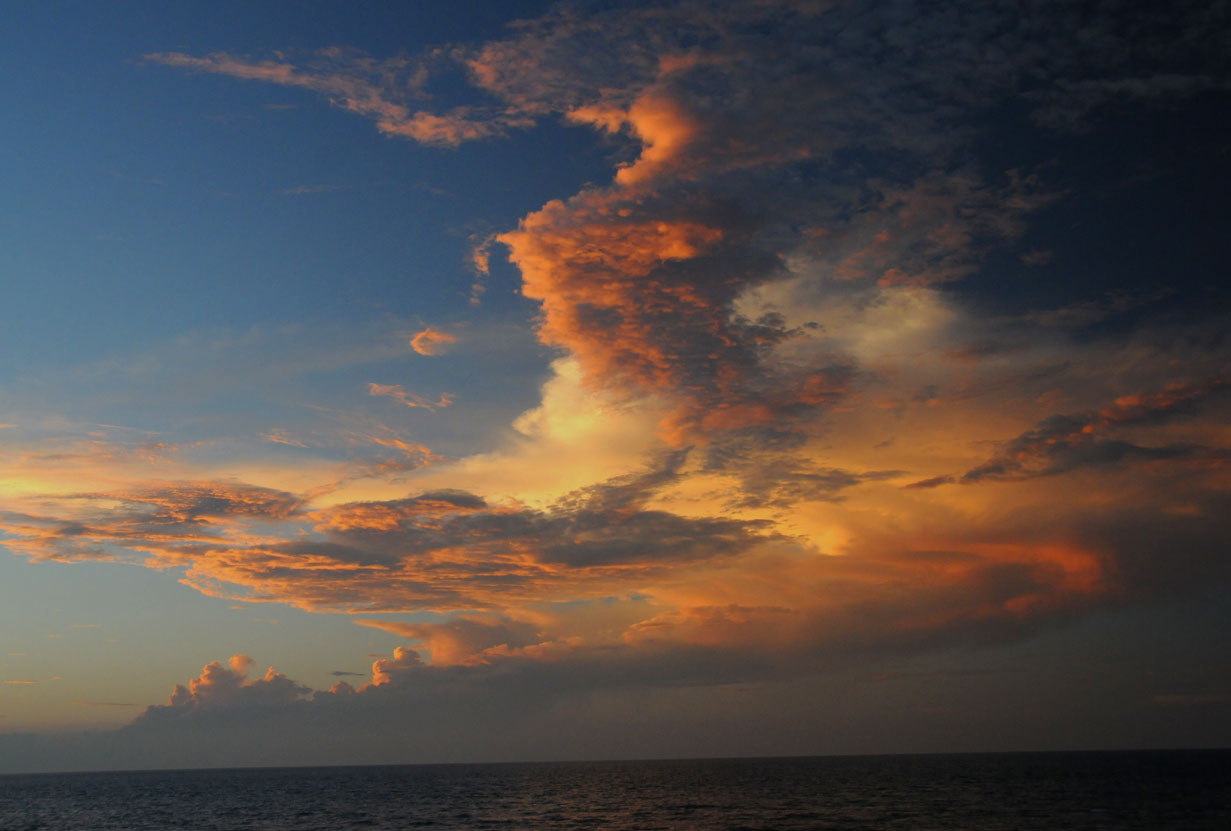
 The boat cruise we took on the Yellow water wetlands, part of the South Alligator River floodplain, may have been our favorite part of our visit to Kakadu. The sunrise over the water after a crack of dawn start to the day illustrates why, perhaps, the area is called Yellow Water.
Say this 3 times very quickly...

Magpie geese gather by the thousands in the billabongs for rest, eating. and raising their families. They are also a major traditional food source.

Magpie Geese
 An Great Egret in flight, demonstrating the dramatic manner in which she can manouvre her neck!
 One of the most remarkable birds we saw was the Jabiru, the black-necked stork. In this magnificent moment, the Jabiru fends off a Whistling Kite from her nest in a tall tree. These birds are 1.4 m, with a wing span of 2 m (that's 4.5 ft tall, with a 6 ft wingspan!).
Jabiru stalking the shallows

Green Pygmy goose

A simply electric color in the bush (Azure Kingfisher)

Lemon-bellied Fly Catcher
 A white-bellied sea eagle surveys his domain.
This photo captures some of the splendid diversity of life in the wetland. Here are plumed whistling ducks, a little egret, and a comb-crested jacana, all in close proximity. It was difficult to decide where to look--so many birds, so little time!
Oh yes, a croc just out of the frame...
 And then there were the saltwater crocodiles!
and more corcs,
and more crocs...
 A female shining flycatcher, uncharacteristically standing still.
A male shining flycatcher - dramatic gender dimorphism
 There were a surprising number of Nankeen Night Herons searching for breakfast along the river margins.
 The comb-crested Jacanas were one of my favorite birds. Common names for them are "Lily-trotter" and "Lotusbird." Their feet are simply an ingeneous work of art. We saw them truly walking from one waterlily pads to another!
Whistling Ducks
 In the next blog, we continue south through Kakadu, heading for the high dry-lands.